|
1
|
- Workshop November 24th and 28th, Monrovia, Liberia
- Dr. Matthias Basedau / James Logan
|
|
2
|
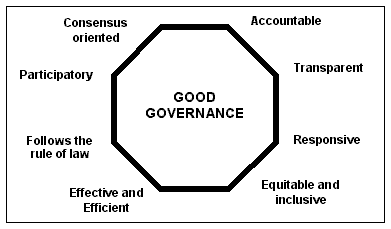
- What is Good Governance?
- Governance in Liberia
- Why Good Governance?
- Coffee Break (around 3h)
- The Functions of Parliament in Liberia
- How Parliament can contribute to Good Governance
- Obstacles and Problems
- Some Remedies
- End of Workshop (around 5 h)
|
|
3
|
|
|
4
|
|
|
5
|
|
|
6
|
- Respect for Basic Human Rights (e.g. Freedom of Expression, Protection
of Minorities)
- The Participation of the Population in the Decision Making Process (e.g.
Free and Fair Elections)
- The Rule of Law (e.g. Independant Judiciary, Accountability of
Government)
- A Sound Framework for a socially Responsible Market Economy (e.g.
Property Rights, Fair Competition, Minimum Social Welfare)
- Development-Orientated Government Policies (e.g. Efficient Use of
Resources, Control of Corruption, Moderate Military Expenditure)
|
|
7
|
- General Political Stability (“Political Stability” & Absence of
Violence)
- Human Rights & Democracy („Voice & Accountability“)
- Rule of Law („Rule of Law“)
- Framework for Market Economy („Regulatory Quality“)
- Effective Government Policies („Government Effectiveness“)
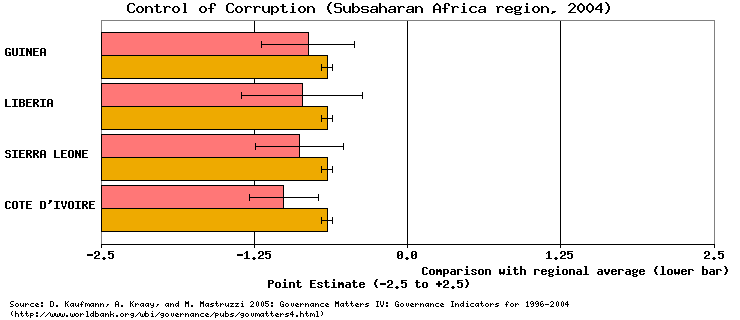
- Level of Corruption / Transparency („Control of Corruption“) D
|
|
8
|
|
|
9
|
- There are different ideas about what Good Governance is exactly.
- Some focus on economic issues only, others on political and social
issues. Some include all of them.
- In any case, efficient use of resources, the control of corruption and a
stable and reliable political and economic framework are essential to Good
Governance.
- Many actors, including Parliament, are involved in Good Governance.
|
|
10
|
- Ownership and commitment
- Adaptation to country-specific conditions
- But:
- Problems must not be used as a pretext for bad governance
|
|
11
|
|
|
12
|
|
|
13
|
|
|
14
|
|
|
15
|
|
|
16
|
|
|
17
|
|
|
18
|
|
|
19
|
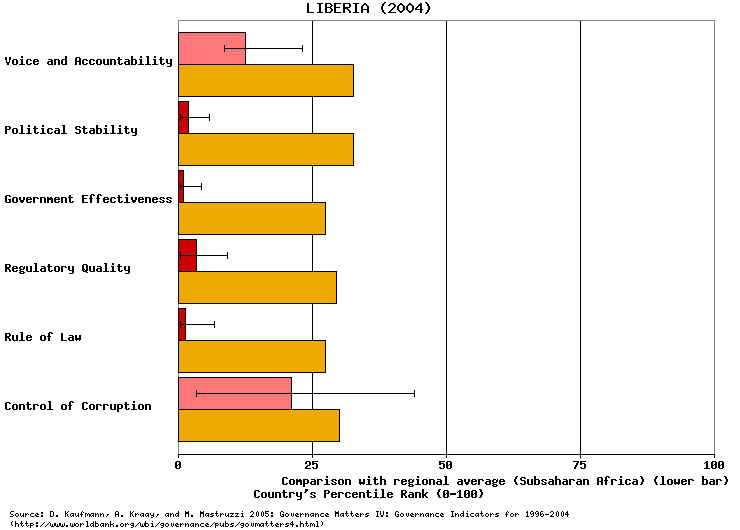
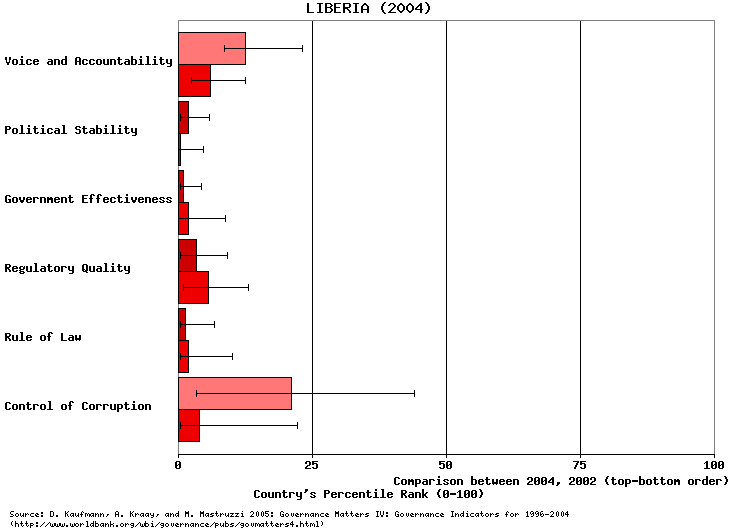
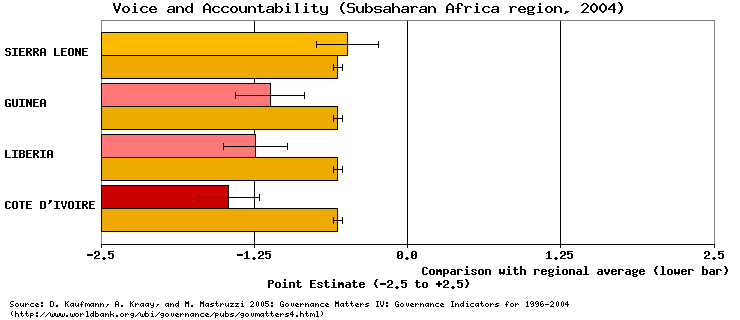
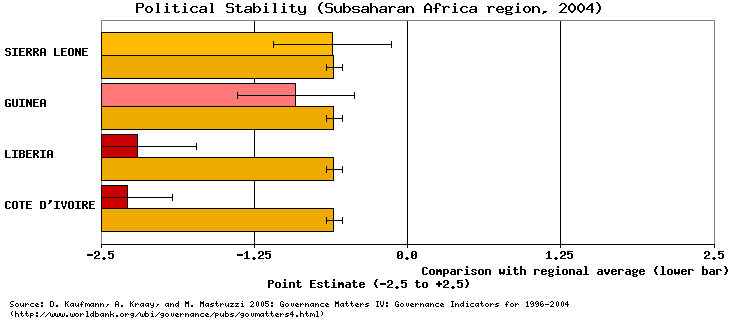
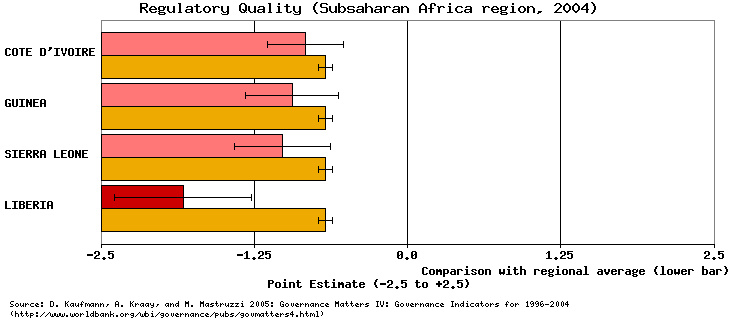
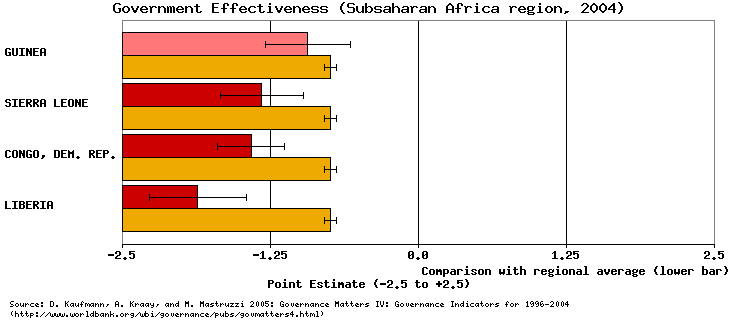
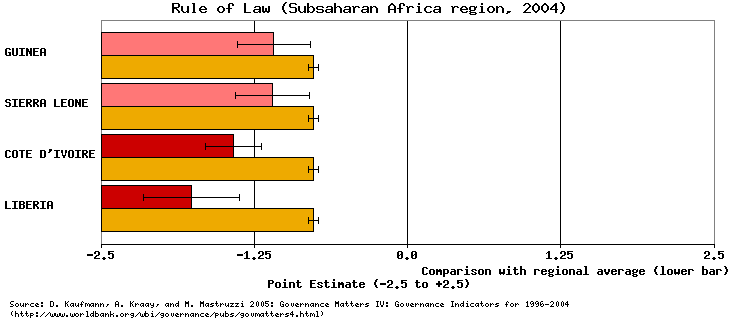
- The overall disappointing performance can be partly explained by violent
conflict in the past;
- There have been some improvements in some areas recently (e.g.
corruption).
- Nevertheless, Liberia can certainly do better.
|
|
20
|
- Good Governance is in the very self-interest of any people. It cannot be
realized without the commitment of its leaders and representatives.
|
|
21
|
|
|
22
|
- Make Laws
- Pass State Budget
- Control Government
- Participate in Poverty Reduction Process
- Serve as Public Forum of Discussion
- Articulate Public Views and Represent Government
|
|
23
|
- Questions for Working Groups:
- How can Parliament or Individual MPs contribute to Good Governance?
- What can hinder Parliament or Individual MPs to contribute to Good
Governance?
- Establish Working Groups (5 Min.)
- Working Groups discuss questions (20. Min.)
- Working Group select Speaker (5 Min.)
- Speakers present results of Working Groups (5. Min. each)
|
|
24
|
- Constitutional dominance of the Executive/Presidency (e.g. decree
powers)
- Potential conflict between Parliament and Presidency (e.g. institutional
deadlock)
- Lack of resources/capacity (e.g. support staff, offices, expertise on
pertinent issues such as state budget)
- Lack of acceptance in the public
|
|
25
|
- Although there are other actors, who are important for good governance,
such as the President and the Judiciary, Parliament has a key role in
realizing Good Governance.
- In order to live up to the challenge MPs have to show commitment but
also deserve support from within and outside the country.
|
|
26
|
- Strengthen Constitutional Powers of Parliament (difficult)
- Enhance capacity and expertise of Parliament/MPs
- Improve cooperation within Parliament/between MPs
- Enhance visibility and acceptance of Parliament/MPs in the public
|
|
27
|
- Establish committees on pertinent issues (e.g. Budget, corruption,
demobilization) and, if necessary, increase their powers
- Make sure that committees have enough time to make themselves familiar
with the issues to be decided
- Provide resources to MPs/Parliament (offices, support staff)
- Establish expertise within Parliament (library, research units)
|
|
28
|
- Make use of modern technology
- Make use of outside research facilities
- Train new MPs on their rights and duties
- Train MPs and staff on pertinent subjects (e.g. budget)
- Increase attendance in Parliament (e,g, imposing penalties)
|
|
29
|
- Draft a code of conduct for all MPs (e.g. use of inappropriate speech)
- Fair and clear procedures (e.g. time allocation for speeches, motions,
hearings, Orders of the Day)
- Elect an impartial Speaker of Parliament who ensures fair and balanced
conduct of business
- Elect strong chairs for committees who can build consensus across party
lines
- Ensure political neutrality of the parliamentary secretary
|
|
30
|
- Establish regular hearings in Parliament
- Broadcast discussions in Parliament on TV and the Radio
- Establish a “televised question hour” where the President and other
Ministers are subject to direct questioning
- Discuss and debate corruption issues frequently
|
|
31
|
- Make MPS declare their assets before election
- Involve civil society in Parliament’s work (e.g. committees)
- Invite citizens to Parliament’s sittings
- Hold information workshops in the Counties
- Make MPs stay in contact with their constituencies
|
|
32
|
- The World Bank
- The UNDP
- USAID (US)
- IDEA (Sweden)
- IMD (Netherlands)
- European Union
- German „Stiftungen“ (e.g. KAS, FES)
|
|
33
|
|

 Notizen